
Check the Details Before Choosing a Pokies Venue
A practical guide to venue hours, location checks, gaming rules and the limits of online casino searches in Tasmania.

When Tasmanian Gaming Venues Are Open
A venue’s general opening hours do not necessarily establish when its gaming room is operating. A restaurant, bar or club may have hours that differ from the hours for its pokies, and a venue’s listed closing time may not answer whether machines are available throughout the day. The practical check is therefore specific: confirm the venue’s current hours, then confirm the gaming area’s hours separately.
For a same-day visit, the most useful information is the latest operating-hours notice from the venue itself. Check its official website or other official channel for temporary changes, then contact the venue if the gaming-room schedule is not stated clearly. A listing that gives only the venue’s overall trading hours leaves an important detail unresolved. If the information is old, undated or inconsistent across channels, direct confirmation is more reliable than treating the first result as current.
The question also needs a precise time. “Open now” depends on when the check is made, while an early-morning or late-night visit depends on the hours for that particular day. A venue may publish regular hours but also post a temporary change. Checking close to departure reduces the chance of relying on a schedule that has since been updated. No particular Tasmanian venue schedule can be assumed from a general description of the state’s gaming industry.
When contacting a venue, distinguish between the building being open and the machines being in operation. A concise enquiry can ask whether the gaming room is open at the intended time, whether the machines will be operating then, and whether any temporary change affects that schedule. If the answer refers only to the premises, ask specifically about the gaming area. That distinction matters most when a visit is planned around a narrow time window: an open dining or bar area does not, by itself, confirm that pokies are available.
 ‘Best Pokies’ in Adelaide: What Can Be VerifiedAn Adelaide listing does not confirm a venue is open or that its gaming area is accessible. Learn what to verify directly…
 Casino in Brisbane: Hotels, Facilities and Stay CostsCompare casino-linked hotel rates with their included benefits, and check who operates the property: booking terms determine what applies if plans change.
A posted schedule should be read for the day it covers and for any qualification attached to it. A weekly timetable may not capture a one-off closure, while a general “open” label may refer to the venue as a whole. If official information cannot resolve the point, a phone call is a straightforward way to confirm it before travelling. The purpose is not to infer a schedule from a venue’s category or reputation; it is to establish the operating status for the particular visit.
There is also a staffing condition relevant to machine operation at larger venues. A report on regionriverina.com.au describes a requirement taking effect from 1 July: venues with more than 20 gaming machines are to have a dedicated responsible gambling officer, or RGO, on duty while those machines are operating. This condition concerns coverage during machine operation; it does not set a venue’s opening hours or confirm that a particular gaming room is open. Nor does it establish the schedule for any named Tasmanian venue.
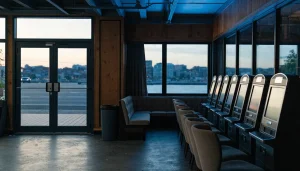
That distinction keeps two separate checks from being confused. The first is operational: whether the gaming room and its machines are available at the intended time. The second concerns the staffing condition described in the report, which applies to venues above the stated machine threshold while machines are running. Neither a venue’s published opening time nor the staffing requirement alone answers every question about a particular visit. Current venue information is still needed.
For early or late visits, the same method applies. A search result that describes a venue as open does not necessarily specify gaming-room hours, and a schedule for another day is not confirmation for the day in question. If a venue does not publish separate machine hours, that absence is not evidence that the machines operate whenever the premises are open. It simply means the point needs direct confirmation.
A reliable check therefore has three parts: identify the date and intended time, find the venue’s own current information, and verify that the stated hours cover the gaming area rather than only the wider premises. If any part remains unclear, contact the venue before setting out. This is more dependable than treating a broad label such as “open” as a promise of machine availability.
What “Best Pokies” Can—and Cannot—Mean
Top Operators
Choosing pokies for Tasmania in 2026 means finding an option whose available details suit your preferences. Use these notes as a concise reference when considering the operators on this list.
-
Roby Casino
- License
- Curacao eGaming (Roby Games Ltd)
Roby Casino is listed with a Curacao eGaming license held by Roby Games Ltd.
-
Uptown Pokies
- License
- Curacao (operating since 2017)
- Min. deposit
- A$20
Uptown Pokies has operated since 2017 and is licensed in Curacao. Its minimum deposit is A$20.
-
GoldenCrown
- License
- Curacao Gaming Control Board OGL/2023/176/0095 (Hollycorn N.V.)
GoldenCrown is licensed by the Curacao Gaming Control Board under OGL/2023/176/0095, with Hollycorn N.V. named as the license holder.
-
JustCasino
- License
- Curacao Gaming Control Board
JustCasino is listed with a Curacao Gaming Control Board license.
-
Lucky Dreams
- License
- Curacao
- Min. deposit
- A$20 (POLi)
Lucky Dreams is licensed in Curacao and has a A$20 minimum deposit via POLi.
-
Golden Pokies
- License
- Curacao
Golden Pokies is listed with a Curacao license.
-
Thor Casino
- License
- Curacao – Antillephone N.V. (Versus Odds B.V.)
- Min. deposit
- EUR 20
Thor Casino is licensed in Curacao through Antillephone N.V. (Versus Odds B.V.). Its minimum deposit is EUR 20.
-
Ricky Casino
- Payout speed
- crypto under 1 hour, PayID 1-3 business days
- Min. deposit
- A$20 (A$30 to qualify for the bonus)
Ricky Casino lists crypto payouts in under an hour and PayID payouts in 1–3 business days. The minimum deposit is A$20, or A$30 to qualify for the bonus.
-
Bizzo Casino
- License
- Curacao Gaming Control Board (TechSolutions Group N.V.)
Bizzo Casino is licensed by the Curacao Gaming Control Board, with TechSolutions Group N.V. named in the license details.
-
Kingmaker
- Payout speed
- crypto ~90 minutes, fiat 1-5 days
- Min. deposit
- A$30
Kingmaker lists crypto payouts at around 90 minutes and fiat payouts in 1–5 days. Its minimum deposit is A$30.
“Best” can describe a preference, but it is not a measurable result unless the basis for comparison is stated. A game’s theme, pace, bonus features or volatility may matter to a player, yet none of those qualities establishes that it will return more money. Without game-specific and venue-level performance figures, a Tasmania-wide ranking would imply a level of comparison that cannot be supported.
Return to player (RTP) is one figure often used to compare pokies. It represents a theoretical return across a very large number of plays, not a forecast for an individual session. A higher published RTP does not mean a particular player will receive more back, or that a win is due after a run of losses. Short-term results can differ sharply from the theoretical figure.
There is another complication: the same game may not have the same RTP wherever it is offered. A specialist review reports that some providers give casinos a choice of RTP settings for a particular pokie. If a casino selects among those settings, the game title alone does not identify its return percentage. The relevant setting would need to be confirmed for the specific offering; a figure attached to another casino cannot automatically be applied to it.
Even when a setting is known, it does not predict the next result. Each spin is generated independently by a Random Number Generator (RNG). Previous outcomes do not make a win more likely on the next spin, and a sequence of losses does not create an obligation for the game to pay. The long-run return and the result of one play belong to different scales of measurement.
This distinction matters when phrases such as “best paying” are used. They can suggest that a game has a dependable capacity to produce a payout, when RTP describes a theoretical average rather than a guaranteed payment or a timetable. A reported jackpot, an individual win or a player’s account of a successful session also cannot establish which game pays best overall. Those are outcomes, not comparative performance data.
A meaningful comparison would need the exact game version, its configured RTP and a consistent basis for measuring results. Venue-level figures would also need to identify which games and settings were actually available at each location, and over what period the results were recorded. Without those details, a comparison between Tasmanian venues—or between a city venue and one elsewhere in the state—cannot be treated as a like-for-like assessment.
The same caution applies when looking for pokies in Tasmania’s CBD or elsewhere in the state. A title appearing in a general game catalogue does not prove that it is installed at a particular venue. Nor does the presence of a game at one location show that its settings or performance match those at another. A list of familiar titles would therefore not amount to a substantiated ranking.
For online games, the same comparison problem remains: a game name or provider does not, by itself, establish the RTP setting used by a particular operator. A stated percentage would need to refer to the exact configuration in question. In any format, a single session cannot verify a theoretical return; the outcomes of independent spins vary.
Do
- Use "best" to describe preferred themes or features
- Verify the specific RTP configuration for a venue
- Treat each spin as an independent random event
Don't
- Use "best" to imply a higher guaranteed return
- Assume a game's RTP is identical across all venues
- Expect a win to be due after a sequence of losses
The defensible meaning of “best pokies in Tasmania” is therefore limited. It can refer to a player’s preferred features, but it cannot be turned into an evidence-based order of games or venues without comparable, specific data. A ranking that skips those conditions may look precise while answering a different question.
Finding a Venue Near an Airport or CBD
A request for pokies near an airport or central business district is a location question, not a ranking of games. The useful answer depends on the exact starting point and the venue’s current address. “Near Tasmania” is too broad to establish a practical journey: the island includes separate towns and regions, and a result in one area may be irrelevant to someone travelling from another.
Airport wording needs the same precision. A result associated with an airport may refer to a place in the surrounding region rather than a venue on airport grounds. A map pin can show where a listed business is located, but it does not by itself establish that the venue has pokies, that the machines are available to patrons, or that the listing is current. Those details should be checked against the venue’s own published information before making a trip.
CBD searches also need a defined centre. “CBD” can mean different areas depending on the town or city, while a broad Tasmania-wide result may combine places that are not close to one another. A venue described as central in one locality should not be treated as central to the whole state. The same distinction matters for searches focused on northern Tasmania: a regional label does not identify a particular town, address, or travel distance.

A practical check is to establish the intended destination first, then compare the venue’s stated address with a current map. The route and estimated travel time should be reviewed from the actual starting point, rather than inferred from a search-result label such as “near airport” or “near CBD”. If the listing does not clearly state whether gaming machines are available, the venue’s own information is the relevant place to confirm that point. A name appearing in a map or directory is not evidence of a particular gaming offering.
“Near me” is especially dependent on device location and search settings. Results can change with the location supplied to a map service, and a general result may be drawn from a wider area than expected. The displayed order is not a measure of distance, quality, or suitability. Checking the address and route is more reliable than treating the first result as the closest option.
For travellers crossing between Tasmania and Victoria, the state label alone is not enough to judge proximity. The relevant comparison is between the specific origin, destination and route. A result tagged to Tasmania may not be close to a Victorian starting point, and a broad regional search can obscure that distinction. The same applies in reverse: a nearby result may sit across a state boundary rather than in the area expected.
Verifying Venue Proximity
-
1
Establish Destination
Define the exact starting point and the intended destination (e.g., a specific airport or CBD).
-
2
Compare Address
Check the venue's stated address against a current map to determine the actual route.
-
3
Confirm Availability
Verify through the venue's own published information that gaming machines are available at that location.
The final decision rests on two separate checks: whether the address fits the intended journey, and whether the venue confirms that it offers pokies. Keeping those questions separate avoids turning a geographic label into an assumption about what is available at the destination.
Venue Rules and Gambling-Harm Records
Assessing a Tasmanian venue involves more than identifying which games are available. The relevant venue-level question is whether gaming-machine operations are subject to clear oversight and whether staff can respond when a patron’s behaviour indicates gambling harm. These duties concern the operation of the venue; they do not establish that one place is a better choice than another.
A report by regionriverina.com.au described a requirement taking effect from 1 July: venues operating more than 20 gaming machines must have a dedicated responsible gambling officer (RGO) on duty while those machines are running. The threshold matters. The reported duty is tied to both the size of the machine operation and its operating period, rather than applying to every venue regardless of circumstances. An RGO’s presence is an oversight measure, not evidence that a venue’s machines are fairer or more likely to produce a win.
The same report described a one-month grace period for venues to remove signage and put the RGO arrangements in place. That transition period is a limited implementation window, not a standing exemption from the requirements. It also does not establish the current compliance status of any particular venue. For a patron comparing local options, a general statement about the rule cannot substitute for venue-specific information.

A separate reported obligation is the keeping of a gambling incident register. The register is intended to capture details of relevant occurrences, including situations where a patron displays behaviour suggesting they may be at risk of gambling harm or already affected by it. In practical terms, this gives the venue a formal record of incidents rather than leaving each response as an undocumented interaction. The obligation concerns recording and oversight; it does not, by itself, show how consistently any individual venue identifies or responds to risk.
These records and staffing arrangements are better understood as basic controls around gaming-machine operations than as a measure of entertainment quality. A venue could meet a formal requirement without that fact indicating anything about the games on offer, the likely return from play, or the experience of a particular patron. Conversely, a lack of publicly visible detail is not enough to conclude that a venue has failed to comply.
For searches concerning pokies venues in Tasmania, the distinction is material: rules can describe what operators are expected to do, while a venue-level assessment requires evidence about the venue itself. The reported requirements provide a framework for staff presence and incident documentation, not a ranking of locations. They also do not establish which venues operate machines, how many they have, or whether a particular venue is currently meeting its obligations. A compliance framework is a floor for oversight, not a recommendation to play.
The Spirit of Tasmania and Online Casino Searches
A reference to pokies on the Spirit of Tasmania should not be read as confirmation that the ferry provides them. The vessel’s name identifies a transport service; it does not establish that gaming machines or other gambling facilities are available aboard. The same distinction applies to phrases combining “Crown”, “Tasmania” and “casino”. A name assembled from familiar terms is not evidence that a casino under that name operates in the state or offers pokies.
That matters because search wording can join separate subjects without proving a connection between them. Travel arrangements, land-based venues and online gambling are different categories. A claim about play during a crossing, or about a named casino’s machines, needs evidence specific to that service or venue. Without it, the name alone cannot support a practical conclusion about where pokies are available.
Online offers sit under a separate legal rule. The Interactive Gambling Act 2001 makes it unlawful for an operator to provide real-money online pokies to people in Australia without a domestic licence. No such licences have been issued, and there is no Australian-licensed online casino. A website describing itself as Tasmanian, or using the state’s name in an offer, does not alter that position.
The same applies to offers framed as no-deposit play. Removing a deposit condition does not make an online casino offer lawful for Australian residents, nor does it create an Australian licence. “Bonus” is a term about an offer’s terms; it is not a regulatory status. A promotional label cannot supply the authorisation that the domestic market does not have.

For real-money play, the relevant distinction is not whether an offer mentions Tasmania, a ferry or a casino brand. It is whether the service is being provided online to someone in Australia and whether the operator holds the required domestic licence. Since no Australian online casino licence has been issued, there is no licensed domestic route for real-money online pokies.
This leaves two separate questions rather than one combined proposition: whether a particular ferry or venue provides gaming facilities, and whether an online operator may lawfully offer real-money pokies to Australian residents. A place name cannot answer the first, and a bonus description cannot change the second. Treating those distinctions as interchangeable turns branding into evidence, which is an expensive way to read a label.
Why “24-Hour Pokies” Needs a Venue Check
The phrase “24-hour pokies” describes an expectation, not a confirmed schedule. It does not establish that a Tasmanian venue is open at a particular time, or that its gaming machines are operating whenever the venue is accessible. Those are separate details, and neither can be inferred from a broad description.
A current check needs to match the intended visit: the venue, the day and the time. General business hours may not settle whether the gaming area is open, while an old listing may no longer reflect current arrangements. A result that calls a venue “24-hour” should therefore be treated as a lead to confirm, not as a guarantee of access to pokies throughout the day and night.
- Identify the intended date and time of visit
- Check the venue's current official opening hours
- Verify specifically if the gaming room is operating at that time
- Confirm that machines are available, not just the general premises
There is also a regulatory distinction between operating a venue and operating its machines. A report by regionriverina.com.au says that, from 1 July, venues with more than 20 gaming machines must have a dedicated responsible gambling officer on duty while those machines are operating. The report also describes a one-month grace period for venues to remove signage and introduce responsible gambling officers. This requirement concerns oversight during machine operation; it does not set a venue’s opening hours or establish that a particular venue runs machines around the clock.
The practical test is simple: confirm the current hours directly with the venue, and ask specifically whether the gaming area and machines are operating at the proposed time. If the available information gives only a general venue schedule, it may not answer the second part. A late-night listing, a map label or a search result is not a substitute for that confirmation.
“Open now” is especially time-sensitive. It can refer to the main premises rather than the gaming area, and information displayed online can lag behind a change in operations. Even a listing that appears current should be checked against the venue’s own latest information before travel. No fixed Tasmanian schedule can be applied across venues as a group.
The useful distinction is between a venue being open and pokies being available. The first concerns access to the premises; the second concerns machine operations at that time. Treating them as identical turns a broad label into a specific promise it does not make. A time-specific confirmation is the sound basis for planning; “24-hour” on its own is not.
What Can Be Verified About Pokies in Tasmania
A statement about pokies across Tasmania needs to be kept separate from a claim about a particular venue. The name of a game, the number of machines at a site and a venue’s reported results are different kinds of information; none can safely stand in for the others. Without reliable Tasmania-specific records, exact claims on those points should not be treated as established statewide facts.

That distinction matters when considering which pokies are “best”. A title may be familiar or popular elsewhere, but that does not establish that it is available at a Tasmanian venue. Nor does the word “best” identify a measurable standard by itself. It could refer to a player’s preferred theme, a game feature or another characteristic. Without a stated measure and supporting local information, the label is opinion, not a finding about Tasmania.
Questions about machine numbers have the same boundary. A total for one venue, even if confirmed, would not show how many machines operate across the state. A statewide figure would need to specify what it counts and the period it covers. Without that context, a precise-looking total can give more certainty than the underlying information warrants.
The same caution applies to questions about maximum bets and cash payouts. These are separate conditions: a maximum stake concerns what can be wagered on a play, while a payout limit concerns what may be paid in a particular circumstance. Neither can be inferred from a game’s name or from a general statement about pokies. A figure without a clearly identified game, venue and applicable terms is not a dependable Tasmania-wide answer.
Place names also need care. A reference to Parkes does not, on its own, establish that a venue is in Tasmania or that it offers pokies. A place name and a state label can be combined in a question while still requiring confirmation that they refer to the same location. Treating the wording as proof would be a poor substitute for checking the actual venue identity.
For any Tasmania-specific claim, the useful test is whether it identifies what is being counted or described, where the information applies and when it was current. A venue-level statement should not be recast as a state figure; a game-level feature should not be presented as a venue policy. Where those distinctions are absent, the precise answer is not established. That is less satisfying than a list of titles or numbers, but it avoids turning an assumption into a fact.
Online Pokies: The Australian Legal Position
A search for online pokies in Tasmania does not lead to an Australian-licensed online casino option. The Interactive Gambling Act 2001 prohibits operators from providing real-money online casino games, including pokies, to people located in Australia. No domestic licences have been issued for that kind of service. A website’s claims about its games, payout rates or access from Tasmania do not change that legal position.
The law’s focus is the operator providing the service, not the individual player. Australians are not criminally liable simply for playing at an offshore site that accepts them, and the legal framework allows that distinction. It does not turn an offshore casino into an Australian-regulated business, however. Permission to play and protection as a customer are separate matters.
That difference becomes material if a casino refuses to pay winnings. Australian players have no legal recourse in Australia against an offshore casino in that situation. There is no local online-casino regulator or Australian licensing arrangement through which the player can rely on the protections attached to a domestic casino licence. The absence of player liability should not be mistaken for a remedy against the operator.

The same boundary applies whether the search concerns pokies in Tasmania, a casino said to be near Tasmania, or games described as high-limit. Location wording and labels on a site do not establish Australian licensing, and the phrase “best paying” is not evidence of a regulated local offer. These descriptions cannot supply the legal safeguards that an Australian licence would provide.
The practical calculation is therefore not just whether a site accepts a registration or displays a game. It is that the operator may be acting unlawfully by offering real-money online casino games to Australian residents, while the player has no Australian legal remedy if winnings are withheld. Access does not equal oversight; a page loading successfully does not create a local regulator’s authority over the operator.
The Australian Communications and Media Authority enforces the Interactive Gambling Act and blocks access to illegal offshore gambling sites. Internet service providers must comply with its blocklist, so access may also be interrupted. A site remaining reachable at a particular moment is not proof that it is authorised in Australia or that its claims can be enforced here.
For a Tasmanian resident considering online pokies, the legal position is narrow but clear: there is no Australian-licensed online casino, the prohibition is directed at operators, and offshore play carries no Australian legal recourse if a casino withholds winnings. Those are different parts of the same arrangement, not competing interpretations.
CBD Clubs and Gaming-Machine Signage
A reference to a club or a central business district does not establish that a particular venue has gaming machines, or that it is located in a particular part of Tasmania. Those are separate details to confirm with the venue. Signage rules, by contrast, give a concrete point to check when assessing how gaming areas are presented.
A sign directing patrons to a gaming lounge must be removed if it is within sight of an ATM or EFTPOS terminal. The restriction also works in the other direction: a sign pointing patrons towards an ATM must be removed if it can be seen from gaming machines. These are placement requirements, not a general ban on every sign at a club. The relevant question is what the sign directs people to and whether it is visible from the specified location.
That distinction matters in compact premises. A sign may be positioned outside a gaming area yet still fall within sight of an ATM or EFTPOS terminal. Likewise, an ATM sign elsewhere on the premises may remain visible from gaming machines. Assessing the sign by its wording alone would miss the location test; the surrounding sightlines are part of the rule.
For anyone comparing clubs in a CBD, signage can therefore be considered as a practical compliance detail, not as proof that a venue offers machines or as a measure of game quality. No particular club, district or machine offering can be inferred from the search for central locations. Venue information needs to be checked directly, and any stated details should be treated separately from the rules that apply to signs.

Self-exclusion is among the standard responsible-gambling tools, alongside deposit, loss and session-time limits. Its mention does not establish which process a particular club uses or how it handles a request. That requires confirmation with the venue. Self-exclusion is a control, not evidence that gambling risk has been eliminated.
The financial distinction is straightforward: a sign’s presence is not a venue recommendation, and a club’s location is not evidence of its machine offer. For signage, the actionable test is whether a direction to a gaming lounge is visible from an ATM or EFTPOS terminal, or whether a direction to an ATM is visible from gaming machines.
Cashless Play and the Newcastle Search
Cashless play and venue location are separate questions. A machine that accepts cashless payment is not, by that feature alone, evidence of a particular venue, game selection or operating arrangement.
“Cashless” can also refer to different arrangements, from a card or account used at a machine to a broader venue payment system. The label alone does not establish how funds are loaded, what controls apply or whether a machine is available at a given location.

A search for pokies in Newcastle, Tasmania, raises a different issue: place. The name does not establish that a relevant venue exists there, nor that it offers gaming machines.
These distinctions matter because a combined phrase can make two unverified assumptions look like one fact: that cashless pokies are available in Tasmania and that a Newcastle venue provides them. Neither follows from the other. A location must be confirmed independently, and any claim about payment technology must relate to the particular venue and its current setup.
For practical comparisons, cashless payment is not a measure of a pokie’s quality or likely return. Each spin remains an independent random event; the payment method does not change that. A cashless option, if present, would describe how play is funded, not the odds or the availability of a particular game.
Are online pokies legal for Australian players?
Yes, Australians can legally play on offshore sites that accept them, but companies cannot legally offer real-money online pokies to Australians without a domestic licence, and no Australian online casino licences have been issued. Players have no legal recourse in Australia if an offshore casino refuses to pay winnings.
What does “wagering requirement” actually mean?
It is the amount you must bet, expressed as a multiple of a bonus, before you can withdraw bonus winnings. For example, a $500 bonus with a 40x requirement means $20,000 in bets; if the requirement applies to a $500 deposit plus a $500 bonus at 35x, it means $35,000 in bets.
Can casinos change the RTP of their games?
Some game providers let casinos choose from multiple RTP settings for a game, so the same pokie can have different return percentages at different casinos. Check the RTP setting for the specific game at the casino where you plan to play.