
Check what Melbourne pokie searches can actually tell you
Return settings do not predict a session, while venue listings, opening hours and location searches need separate checks.

How Pokie Returns and Randomness Work
A return-to-player figure describes a game setting, not a forecast for a particular session. It is useful for comparing published game information, but it cannot say what will happen on a single spin or establish which pokie will pay out next. A high stated return is not a promise of a win, and a low result in one session does not show that the game’s settings have changed.
A specialist review reports that some game providers give casinos a choice of return settings for the same pokie. Where that option is available, the title alone does not establish its return percentage: the setting selected for that game matters too. The same named game can therefore have different stated returns at different casinos. Any comparison of Melbourne casino pokies needs to account for the setting, rather than treating the game name as a complete description.
That distinction matters when people look for the best-paying pokies in Melbourne or compare games available in the city. A label such as “best” cannot be supported by a title alone. It would require comparable information about the return setting, and even then the comparison would describe the stated game configuration—not a reliable outcome for an individual player. No return figure removes the uncertainty of a particular session.
Top Operators
Choosing pokies to play in Melbourne is easier when you can check the practical details that are available for each operator. Use these notes as a starting point and verify any current terms before signing up.
-
Roby Casino
- License
- Curacao eGaming (Roby Games Ltd)
Roby Casino is listed with a Curacao eGaming license held by Roby Games Ltd.
-
Uptown Pokies
- License
- Curacao (operating since 2017)
- Min. deposit
- A$20
Uptown Pokies has operated since 2017 and is licensed in Curacao. Its minimum deposit is A$20.
-
GoldenCrown
- License
- Curacao Gaming Control Board OGL/2023/176/0095 (Hollycorn N.V.)
GoldenCrown is licensed by the Curacao Gaming Control Board under OGL/2023/176/0095, with Hollycorn N.V. named as the license holder.
-
JustCasino
- License
- Curacao Gaming Control Board
JustCasino is listed as licensed by the Curacao Gaming Control Board.
-
Lucky Dreams
- License
- Curacao
- Min. deposit
- A$20 (POLi)
Lucky Dreams is licensed in Curacao and accepts a minimum deposit of A$20 via POLi.
-
Golden Pokies
- License
- Curacao
Golden Pokies is listed with a Curacao license.
-
Thor Casino
- License
- Curacao – Antillephone N.V. (Versus Odds B.V.)
- Min. deposit
- EUR 20
Thor Casino is licensed in Curacao by Antillephone N.V. for Versus Odds B.V. Its minimum deposit is EUR 20.
-
Ricky Casino
- Payout speed
- crypto under 1 hour, PayID 1-3 business days
- Min. deposit
- A$20 (A$30 to qualify for the bonus)
Ricky Casino lists crypto payouts in under an hour and PayID payouts in 1–3 business days. The minimum deposit is A$20, or A$30 to qualify for the bonus.
-
Bizzo Casino
- License
- Curacao Gaming Control Board (TechSolutions Group N.V.)
Bizzo Casino is licensed by the Curacao Gaming Control Board, with TechSolutions Group N.V. named in the license details.
-
Kingmaker
- Payout speed
- crypto ~90 minutes, fiat 1-5 days
- Min. deposit
- A$30
Kingmaker lists crypto payouts at around 90 minutes and fiat payouts in 1–5 days. Its minimum deposit is A$30.
The Random Number Generator (RNG) determines the result of each spin. Each spin is processed as a separate random event, rather than as a step in a sequence that owes a win because earlier spins lost. A run of losses does not make the next spin due to pay, and a recent win does not show that the following result is less likely to be a win. Past outcomes do not provide a dependable signal about the next one.
RTP and randomness answer different questions. RTP concerns the game’s return setting; the RNG concerns how each individual result is produced. A stated return does not describe a guaranteed share returned within a short session, while the randomness of spins does not mean that the published setting is irrelevant. They operate at different levels, so neither should be used as a shortcut for predicting a payout.
This is also why a list of games described as the best pokies in Melbourne would need more than familiar names or a reputation for paying. The title may be the same while its return setting differs, and a published setting cannot identify which game will produce a win at a chosen moment. Without comparable settings, a ranking would imply precision that the game names do not provide.

For physical pokies in Melbourne, the practical distinction is straightforward: the game’s name identifies the title, while its selected return setting describes a separate configuration. The RNG then determines each spin independently. Those details can clarify what a return figure means, but they cannot turn it into a personal payout estimate or a prediction for the next result.
Melbourne Venues and Their Gambling-Safety Obligations
A Melbourne venue’s number of pokies determines whether a specific staffing requirement applies. According to a report by regionriverina.com.au, venues operating more than 20 machines must have a dedicated responsible gambling officer (RGO) present while those machines are running, with the change taking effect from 1 July. The threshold is strict: the reported requirement concerns venues above 20 machines, not those with exactly 20.
That distinction matters when assessing what a venue’s safeguards involve. An RGO is a designated role connected to responsible gambling, and the reported duty is tied to the period when the machines operate. It is not simply a requirement to have someone available at some point during the day. The rule, as reported, does not establish that every venue has the same staffing arrangement or that a particular venue meets the requirement.
The report also describes a one-month grace period for venues to introduce responsible gambling officers and remove signage. That transition period concerns implementation; it is not a continuing exemption from the reported requirement. The report does not establish the compliance status of individual Melbourne venues, so the existence of the rule alone cannot confirm that a particular premises has appointed an RGO or completed the signage change.
A separate safeguard is a gambling incident register. Venues are to record relevant occurrences, including situations in which a patron’s behaviour indicates possible gambling harm or that the person is affected by it. The register makes the response more than an informal conversation that leaves no record: an incident can be documented for venue handling. The requirement described is about recording occurrences, not publishing a public account of patrons or providing a score by which venues can be ranked.
For anyone comparing Melbourne pokies venues, these are operating obligations rather than evidence that one venue is “best.” A venue’s machine count may determine whether the reported RGO requirement applies, while the incident register concerns the recording of harm-related events. Neither fact establishes machine selection, returns, the quality of a venue’s response, or its current compliance. Those are separate questions and cannot be settled by a general description of the rules.
The practical distinction is between a safeguard existing on paper and a specific venue carrying it out. The reported threshold, duty period, transition window and incident-recording requirement describe what venues are expected to implement. They do not supply a venue-by-venue list or demonstrate how a particular incident was handled. A responsible gambling officer requirement should therefore be treated as one operating condition, not as a guarantee that gambling harm will be prevented.
These measures also do not turn a venue into a risk-free setting. The register records certain occurrences; the RGO requirement assigns a dedicated role at venues above the stated machine threshold while machines are operating. Neither provision changes the underlying financial risk of pokies. For a comparison framed around “best pokies” in Melbourne, the available regulatory details support a narrower assessment: whether the applicable safeguards are in place, rather than a ranking of venues or a claim about which one offers better play.
What Crown-Specific Searches Can—and Cannot—Establish
A request about Crown Melbourne is narrower than a general search for pokies in Melbourne. It identifies a named venue as the subject, but the wording alone does not establish what machines are available, where they are located, or whether any particular room meets someone’s definition of the best pokies room.

Those details require current, venue-specific evidence. A result that repeats a venue name or describes a gaming area is not, by itself, confirmation of the machines on offer. Nor does a broad description establish a game’s return setting. A title’s published return, where available, may not identify the setting in use at a particular venue. Without information tied to the specific game and location, comparisons based on return are not supportable.
The distinction matters because “best” has no fixed accounting meaning. It could refer to a preferred game, a particular feature, a return percentage, or simply a room someone likes. Those criteria are not interchangeable. A claim about one does not prove the others, and a venue-wide description cannot substitute for evidence about an individual game.
Search results can also blur Crown-specific information with general Melbourne venue material. A citywide list, map result or discussion of local venues does not verify Crown’s machines or facilities. Likewise, information about Crown cannot establish what is available elsewhere in Melbourne. Keeping the scope to the named venue avoids treating unrelated descriptions as evidence.
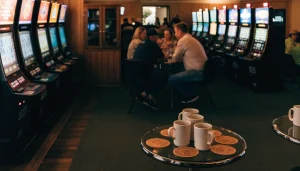
The same limit applies to practical details. A page mentioning Crown does not, on that basis, confirm current opening hours, access arrangements, amenities or the availability of a particular gaming area. Such matters can change, so older descriptions may not match present conditions. A listing should be treated as a lead to check, not as proof of current operating details.
For a meaningful comparison, the relevant evidence would need to identify the specific game or facility, state the basis for the claim, and be current enough to apply to the visit in question. If those elements are absent, a confident ranking is presentation rather than measurement. The name of a venue supplies a location reference; it does not supply the missing data.
This is also why a Crown-focused request should not be folded into a general Melbourne ranking. The first concerns claims about one named venue; the second would require comparable information across multiple venues. Neither a result count nor repeated wording resolves that difference. A defensible account stays within what the evidence actually identifies and leaves unverified machine, return, room and operating claims unstated.

Online Pokies and the Australian Legal Position
An online casino presented as serving Melbourne sits under a different legal framework from a physical venue. The Interactive Gambling Act 2001 prohibits companies from providing real-money online pokies to people in Australia without a domestic licence. No Australian licences for online casinos have been issued, so there is no Australian-licensed online casino offering those games.
The distinction is between the operator’s conduct and the player’s position. The Act targets companies that provide prohibited services; it does not make an individual player criminally liable merely for accessing an offshore site. Australians may technically play on offshore sites that accept them. That does not make the operator’s service lawful in Australia, or provide the protections attached to a domestic gambling licence.
For Melbourne residents comparing online pokies with local options, the word “licensed” needs a jurisdiction attached to it. An offshore licence is not an Australian licence. Nor does a site appearing in search results, accepting Australian customers, or presenting itself as available in Melbourne establish that it is authorised under Australian law. Online access and lawful provision are separate questions.
There is also a material difference between being able to place a bet and having a remedy if the transaction goes wrong. If an offshore casino refuses to pay winnings, an Australian player has no legal recourse in Australia. A foreign licence does not create an Australian mechanism for compelling payment. The balance sheet is therefore asymmetric: the site may accept deposits, while a disputed withdrawal may leave the player without a domestic legal route to recover the money.
This matters to searches for high-limit play, cashless deposits or games described as paying well. Such labels do not alter the legal position, establish a particular return, or create a right to collect winnings. Payment access is not evidence of Australian authorisation, and no claim about a game’s payout can resolve the jurisdictional risk. The key distinction is not whether an online service can be reached from Melbourne, but whether the company is permitted to provide real-money casino games to people in Australia.
The law also should not be reduced to a simple warning that players are committing an offence by visiting an offshore site. The stated restriction falls on providers, while the practical consequences for a player include the absence of Australian casino licensing and no Australian legal recourse against an offshore operator that withholds winnings. Those are separate points, and both matter when assessing online play. A result that looks local does not turn an offshore service into a domestic one.
Pokies Near Melbourne Airport: Location Checks Before Travel
A venue described as being near Melbourne Airport is not necessarily inside the airport, beside a terminal or on a direct route into the city. “Near” is a loose location label, not a measure of distance or travel time. Without a confirmed address and route, it cannot support a reliable estimate of how long a detour would take.
The same distinction applies to searches referring to Melbourne Central, Port Melbourne or the central business district. A place name identifies the area of interest; it does not establish that a particular venue is there, how far it is from a landmark or whether a journey between them is straightforward. Location wording is not a substitute for an address.
Separate the landmark from the venue
Airport-related wording can describe several different things: a venue inside an airport complex, one in the surrounding area, or one elsewhere in Melbourne that has been grouped into a broad travel category. Those are not interchangeable. A listing that uses the airport as a reference point does not, by itself, establish that pokies are available in an airport terminal.

Before treating a result as relevant to a journey, the location needs to be identifiable at street-address level. The address should match the venue’s own current information, rather than only a search result title or a general map label. If the address cannot be confirmed, distance comparisons are premature.
The same check matters for Melbourne Central. A result associated with that name may refer to the landmark, a nearby street or a broader central area. Those labels can be useful for orientation, but they do not establish a specific entrance, walking distance or route. Port Melbourne also needs to be treated as a place name, not as confirmation of an individual venue’s position.
Build a route from confirmed points
A useful travel comparison starts with two fixed points: the actual departure point and the venue’s confirmed address. A phrase such as “near the airport” supplies neither a precise origin nor a destination. Even a map pin needs to be checked against the venue’s own listing, because a broad label may not show the entrance or the exact site.
Route information should be checked separately from the venue’s location. The route may differ according to the chosen travel method and conditions at the time. No general description of an area can establish a current journey time, transport connection or suitable transfer point. Those details should come from current mapping or transport information, not from the wording of a venue category.
Travel Planning
-
1
Confirm Address
Identify the venue's street-address level location to ensure it matches the destination on a map.
-
2
Establish Starting Point
Define the actual departure point to avoid relying on loose labels like "near me."
-
3
Map the Route
Check current mapping or transport information to determine the actual journey time and connection.
For a stop planned around a flight, a location claim alone cannot show whether the visit fits the schedule. The airport terminal, the point of arrival or departure, the route, and any time needed to return are separate parts of the calculation. Each requires current information; a short-sounding distance label does not settle them.
Treat “near me” as an incomplete location
A “near me” result depends on the location being used by the device or service. It may be based on a current position, a manually entered place or another location setting. If that starting point is unclear, the order of results cannot be read as a dependable distance ranking.
A result appearing first does not prove that it is the closest option, that it is open or that it has the requested facilities. Those are distinct claims and need separate confirmation. For travel planning, the useful sequence is simple: establish the starting point, confirm the venue’s address, then check the route and any current operating details directly. If one part cannot be confirmed, the travel estimate remains incomplete.

What a location search can establish
Location wording can narrow the area someone intends to investigate. It cannot, on its own, establish a venue’s presence, machine availability, opening status, distance from a landmark or ease of access. That limit applies whether the reference point is Melbourne Airport, Melbourne Central, Port Melbourne or the CBD. It also applies to broad searches for pokies in Melbourne without a more precise starting point.
The distinction is practical rather than technical. A reliable itinerary depends on facts about a particular place and a particular journey. A broad area name provides neither. Treating it as if it did can turn an assumed nearby stop into an unplanned detour—the sort of error that a map label cannot reimburse.
When “Open Now” Is a Real-Time Question
A venue’s published opening hours describe its usual schedule; they do not prove that it is operating at this moment. That distinction matters when checking whether a Melbourne venue with pokies is open now, rather than planning around its general hours. A listing can remain visible even when a venue has changed its schedule, closed temporarily or is not admitting patrons.

An “open” label is therefore a time-sensitive status, not a standing guarantee. Search results and map listings can be useful starting points, but the displayed information may not reflect a recent change. The date or time when a listing was last updated is relevant: without a current timestamp, the status should be treated as provisional.
For a decision that depends on arriving at a particular time, the most useful confirmation is one that refers to that day and the relevant hours. A venue’s own current notice or direct confirmation can resolve uncertainty that a general listing cannot. If no current confirmation is available, the accurate answer is that the live status has not been established—not that the venue is open.
This applies whether the intended arrival is early in the morning, later in the day or late at night. Terms such as “open early” and “open late” are relative unless tied to a published schedule. A request about a specific morning time needs confirmation for that time; a general statement that a venue opens early does not settle it. The same applies to any other chosen arrival time.
It is also worth separating the venue’s hours from the availability of its gaming area. A listing that confirms a venue is open does not, by itself, establish that every area or service is operating. Where the distinction affects a visit, the status of the relevant area needs its own confirmation. Assuming that venue-wide opening automatically means every facility is available adds a fact that the listing may not provide.
Search results for Melbourne pokies open can also combine different kinds of information: regular hours, a current open-or-closed label, and descriptions of the venue. These should not be read as interchangeable. Published hours give a schedule; a live status attempts to describe the present; a venue description may say nothing about either. The practical check is whether the information answers the actual question, for the intended time, rather than merely mentioning opening hours.

A separate question concerns a pokie’s payout percentage. A venue being open now says nothing about the return setting of a particular game, and a published opening schedule cannot establish that percentage either. These are different pieces of information and should not be treated as one combined claim. An open label is evidence, at most, about operating status—not game terms.
The wording of a listing also matters. “Open today” may refer to some part of the day, while “open now” is a claim about the moment the status was checked. Neither phrase necessarily describes the time of a later arrival. If a schedule lists opening and closing times, those times are more informative than a bare status label, but a schedule can still be changed. Where timing is important, a current confirmation is more useful than an undated snippet.
There is no reliable way to infer current availability from a venue’s name, suburb or usual pattern. Nor does a result for “pokies open in Melbourne” establish that a particular venue is accepting visitors at the time of reading. The precise location and current status both need to be clear before treating a listing as actionable.
The distinction is simple: published hours are a schedule, while “open now” is a live-status claim that can expire quickly. Keeping those two facts separate avoids turning an old listing into a present-tense certainty.
24-Hour Pokies and Published Venue Hours
“Open around the clock” and “open now” describe different conditions. The first suggests uninterrupted access throughout the day and night; the second is a snapshot that depends on the venue’s current operating status. A published timetable addresses neither automatically: it states scheduled hours, which may differ from live availability.
That distinction matters when comparing Melbourne venue information. A listing with opening and closing times can show the hours a venue publishes, but it does not establish that the gaming area operates on the same schedule. Nor does a late closing time mean continuous service through the following day. The wording attached to the hours matters as much as the hours themselves.
Do
- Check for an explicit statement of continuous operation for 24-hour access.
- Treat separate daily schedules as distinct periods of availability.
- Confirm current live status directly with the venue.
Don't
- Assume a late closing time implies uninterrupted 24-hour service.
- Mistake a general directory entry for a real-time confirmation of opening.
- Assume gaming areas follow the same schedule as the wider premises.
For a genuine 24-hour claim, the relevant detail is whether the venue states that it remains open continuously, rather than simply displaying broad or overnight hours. If the information gives separate daily schedules, those should be read as separate periods, not combined into an assumption of uninterrupted access. Any stated exceptions or holiday changes also affect the practical meaning of a timetable.
“Open now” requires a different check. It concerns the status at the time of arrival, while published hours describe an expected schedule. Temporary changes can make the two diverge, so a general directory entry is not the same as a current confirmation from the venue. The same caution applies to pokies: venue opening hours alone do not necessarily confirm that machines are available whenever the wider premises are open.
A useful comparison records three things separately: the venue’s published hours, whether it explicitly describes its operation as continuous, and whether its current status has been confirmed. Keeping those categories apart prevents an overnight schedule from being mistaken for a 24-hour service, or a usual timetable from being treated as proof that the doors are open at a particular moment.

The wording “24-hour pokies” therefore requires more than a late-night listing. It implies an uninterrupted operating pattern, while ordinary opening hours provide a schedule and “open now” describes a present-tense status. Those are related checks, but they are not interchangeable.
Pokies Across Melbourne’s Eastern and Western Suburbs
East, south-east and west are broad geographic labels, not venue directories. A result described as being in one of these areas may sit beyond the suburb someone had in mind, so the label alone is not enough to establish proximity. The same applies to St Kilda: it is a specific locality, while “south-east Melbourne” can refer to a much wider area.
A useful comparison starts with the actual suburb or street address, then checks that the venue’s own published information uses the same location. A map pin and a suburb label answer different questions: one marks a point; the other describes an area. Neither, by itself, confirms what is available inside. Machine types, counts and operating details should not be inferred from a location heading.
Searches that combine Newcastle and Melbourne need a separate geographic check. Newcastle is not a Melbourne suburb, and a result containing both place names does not establish that a venue is in either location. The city attached to an address matters more than the wording of a listing.

“Maximum bet” is also a different kind of detail from location. It refers to a game setting, not to an area-wide feature, and there is no single figure that can be assigned to eastern, south-eastern or western Melbourne. A location label cannot establish the available stake settings at an individual machine. Nor does the word “best” establish a measurable comparison: without consistent, published criteria, it is a judgement rather than a verifiable attribute.
These distinctions keep the geographic task narrow. A suburb name can help identify where a listing claims to be; it cannot substantiate machine availability, a maximum stake or a ranking. Details should be attributed to the specific venue or game information that states them, rather than carried across from another suburb or a city-wide label.
The practical result is a location check, not a recommendation. East Melbourne, the south-east, St Kilda and the western suburbs should be treated as separate place descriptions, and Newcastle as a separate city. Where a listing does not make its address or the relevant detail clear, the label cannot fill that gap.

Melbourne CBD Pokies and Club Searches
A central-city club search and a request for the “best” pokies describe different things. The first concerns venue type and location; the second implies a comparison of machines or returns. A club’s name or category alone does not establish that it has pokies, what it offers, or whether it suits a particular purpose. A ranking without consistent information about the machines and their terms would be a label, not a useful comparison.
For a CBD venue, the practical details are specific to the individual location: whether it operates gaming machines, its access conditions and the services available on site. Those details should be confirmed with the venue before making a trip. General descriptions of Melbourne clubs cannot establish what is available at a particular address, and machine availability should not be inferred from a club listing.
Self-exclusion is a separate consideration from choosing a venue. It is one of the responsible-gambling tools used to help restrict access to gambling. BetStop has a narrower scope: it applies to Australian-licensed operators and does not bind offshore sites. It should not be treated as a blanket restriction covering every place or service where gambling may be available. For a physical venue, the relevant self-exclusion process is the venue’s own.
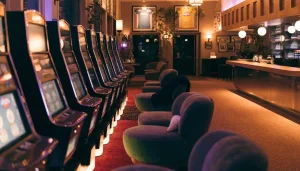
The distinction matters because a search for self-exclusion across Melbourne does not identify the process at a CBD club. A venue’s procedures, coverage and practical effect need to be established directly; the existence of a general tool does not confirm that a particular venue is included. Self-exclusion is a control, not a way to compare venues or predict gambling outcomes.
A sound CBD comparison therefore separates location from operating details and separates those details from personal safeguards. Club status does not prove machine availability, and a central address does not establish a particular offer. The useful record is the venue’s own current information, checked against the specific requirement—access, facilities or self-exclusion—rather than a broad label such as “best.”
North and South Melbourne: Local Searches, Not Verified Venue Listings
North Melbourne and South Melbourne are separate location labels, not interchangeable descriptions of central Melbourne. A result associated with one should not be treated as evidence that a venue is in the other. The distinction matters when a map displays a broad Melbourne result or groups nearby places under a wider area name.

For a local search, the useful unit is the venue’s street address. A suburb label can narrow a map, but it does not establish the exact distance between a venue and a starting point, nor whether the result is within the intended neighbourhood. Comparing the address shown in a listing with the destination on a map is a more reliable way to avoid confusing a nearby area with the suburb itself.
North Melbourne and South Melbourne searches also should not be read as a single citywide list. A result tied to one locality does not establish what is available in the other, and a general Melbourne listing may not provide enough detail to settle the distinction. The place name and the address need to agree before the result is treated as local.
This is a location check, not a measure of game quality or likely returns. A suburb label cannot establish a pokie’s settings, outcomes or operating conditions. Those are separate questions from where a venue is located. For travel planning, the practical comparison is between the intended suburb and the venue’s stated address—not between broad area labels or search-result order.
Are online pokies legal for Australian players?
Yes, Australians can play on offshore sites that accept them, but operators cannot legally offer real-money online pokies to Australian residents without a domestic licence, and none have been issued. Australian players have no legal recourse in Australia if an offshore casino refuses to pay.
What is the legal age for online gambling in Australia?
You must be at least 18 years old to gamble online in Australia.
Can casinos change the RTP of their games?
Yes. Some providers let casinos choose between different RTP settings for the same pokie, so the same game can have different stated returns at different casinos.